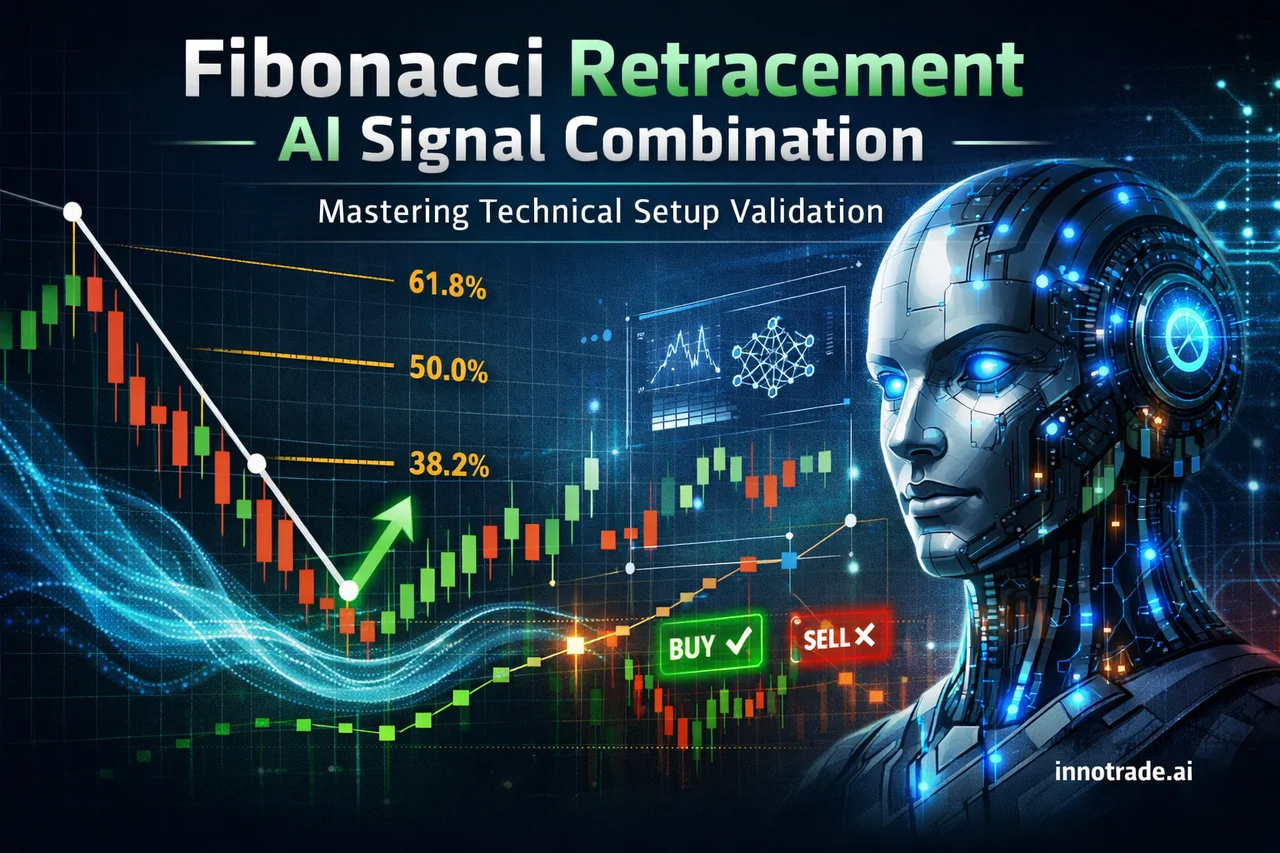
Fibonacci retracement remains one of the most reliable technical tools in trading, but combining it with AI-generated signals creates a powerful validation system that significantly improves entry timing and profit optimization. This comprehensive guide explores how to integrate traditional Fibonacci analysis with modern AI signal confirmation for superior trading results.
Understanding the Fibonacci-AI Signal Combination Framework
The marriage of Fibonacci retracements with AI analysis creates multiple layers of confirmation that help filter high-probability setups from market noise. While Fibonacci levels identify potential reversal zones based on mathematical ratios, AI analysis processes vast amounts of real-time data to confirm whether these zones are likely to hold or break.
Recent platform performance data demonstrates the effectiveness of this combined approach. Over the past week, analyses incorporating technical confirmation showed consistent positive expected value, with the strongest performance occurring on Friday, May 15, which achieved an EV score of 1.18 alongside an 80.0% win rate. This standout session exemplified how technical setups aligned with AI confirmation can produce exceptional results when market conditions favor structured approaches.
The Three-Tier Confirmation Process
Successful Fibonacci-AI combination trading relies on a systematic three-tier confirmation process:
- Fibonacci Level Identification: Mark key retracement levels (23.6%, 38.2%, 50%, 61.8%, 78.6%) on your chosen timeframe
- AI Signal Generation: Allow the AI analysis to identify entry opportunities near these critical levels
- Confluence Validation: Confirm that both technical and AI indicators align before executing the trade
Timeframe Selection and Multi-Chart Analysis
Different trading styles benefit from specific Fibonacci-AI combinations depending on timeframe selection. The platform's analysis structure accommodates all three primary trading approaches with remarkable consistency.
Scalping Approach (1-15 minute charts)
For scalping strategies, focus on intraday Fibonacci levels drawn from recent swing highs and lows. The AI's entry point precision becomes crucial here, as scalping requires tight timing within small price movements. When AI signals align with 38.2% or 50% retracement levels during active sessions, they often provide the quick reversal opportunities scalpers seek.
The platform's TP1/TP2/TP3 structure particularly benefits scalping approaches, as the sequence allows for rapid partial profit-taking that captures the swift moves typical of retracement bounces. Target the first take-profit level at nearby resistance or the next Fibonacci extension level, while using the AI-generated stop loss for precise risk management.
Day Trading Strategy (15 minute to 4-hour charts)
Day trading with Fibonacci-AI combinations offers the sweet spot of technical reliability and AI precision. Draw your Fibonacci levels from the previous day's or session's major swing points, then wait for AI entry signals to confirm potential reversals at key levels.
The most effective setups occur when price approaches the 61.8% or 78.6% retracement levels—historically the strongest reversal zones—and AI analysis simultaneously identifies supporting factors like momentum divergence or institutional order flow. Recent tracking shows that day trading setups with this dual confirmation maintained strong performance consistency, with Wednesday, May 13 demonstrating a solid 66.7% win rate and 1.58 average risk-reward ratio.
Swing Trading Implementation (Daily and weekly charts)
Swing trading represents the most powerful application of Fibonacci-AI combinations, as larger timeframes provide more reliable retracement levels while AI analysis can process longer-term trend data for superior signal quality. Weekly Fibonacci levels drawn from major market swings create incredibly robust support and resistance zones.
When swing trading with this methodology, use the AI's three-tier profit-taking structure to scale out of positions as price moves through Fibonacci extension levels. This approach maximizes the profit potential of major trend continuations while maintaining the risk management discipline that long-term success requires.
Currency Pair Selection and Market Session Optimization
The effectiveness of Fibonacci-AI combinations varies significantly across different currency pairs and trading sessions. Recent data from the platform's tracked instruments reveals distinct performance patterns that traders can exploit.
BTCUSD emerged as a standout performer over the past two weeks, demonstrating strong technical respect for Fibonacci levels combined with reliable AI signal generation. The cryptocurrency's inherent volatility creates clear swing points for Fibonacci measurement, while its 24/7 trading nature provides consistent opportunities for AI analysis across all sessions.
XAUUSD also showed significant activity recently, though with different characteristics. Gold's tendency to respect key technical levels makes it ideal for Fibonacci analysis, particularly during London and New York overlap periods when institutional trading creates the clear directional moves needed for reliable retracement identification.
Session-Specific Strategies
The London session provides optimal conditions for Fibonacci-AI strategies across major currency pairs. The session's high liquidity and volatility create the clear swing points necessary for accurate Fibonacci measurement, while AI analysis can effectively process the increased data flow for precise entry timing.
Asian session trading requires modified approaches, focusing on range-bound strategies where Fibonacci levels identify key boundaries within established ranges rather than trend retracement opportunities. When AI signals align with 50% retracement levels during range-bound Asian trading, they often provide reliable reversal trades with favorable risk-reward profiles.
Entry Timing and Signal Validation Techniques
Precise entry timing separates successful Fibonacci-AI traders from those who struggle with this combination approach. The key lies in waiting for multiple confirmation factors to align simultaneously rather than acting on partial setups.
Monitor price action as it approaches key Fibonacci levels, but resist the urge to enter immediately upon contact. Instead, wait for the AI analysis to generate its entry signal, which incorporates additional factors like momentum, volume, and market structure that may not be immediately visible on price charts alone.
The Confluence Entry Method
The most reliable entries occur when AI signals appear within 5-10 pips of major Fibonacci levels (38.2%, 50%, 61.8%) combined with additional technical factors:
- Previous support/resistance levels coinciding with Fibonacci retracements
- Round number psychological levels (1.1000, 1.2500, etc.) near retracement zones
- Moving average confluence at or near Fibonacci levels
- Momentum divergence visible on oscillators at retracement extremes
When three or more of these factors align with an AI entry signal at a key Fibonacci level, the probability of a successful reversal increases dramatically.
Profit Optimization Through Strategic TP Sequencing
The platform's three-tier profit-taking structure aligns perfectly with Fibonacci-based profit targeting, creating a systematic approach to position management that maximizes gains while protecting capital.
Set TP1 at the next significant Fibonacci level in your favor—often the 23.6% retracement of the corrective move or the nearest Fibonacci extension level. This conservative first target captures quick profits from initial reversals while leaving room for larger moves.
TP2 should target more ambitious Fibonacci extension levels (127.2% or 161.8%), particularly when the AI analysis suggests strong momentum continuation. Weekly performance data shows that this balanced approach to profit-taking maintains consistent positive expected value even when not all positions reach their final targets.
Reserve TP3 for major Fibonacci extension levels (200% or 261.8%) during strong trending conditions. While these extended targets hit less frequently, they capture the significant moves that transform good trading weeks into exceptional ones. The strongest day this period demonstrated how extended profit targets can dramatically improve overall returns when market conditions align favorably.
Dynamic Stop Loss Management
Effective stop loss placement in Fibonacci-AI strategies requires both mathematical precision and adaptive management. Initially place stops beyond the next significant Fibonacci level opposite to your trade direction—typically 10-20 pips beyond the 78.6% or 88.6% retracement level to avoid false breakouts.
As positions move favorably, trail stops to breakeven once TP1 is achieved, then advance stops to previous Fibonacci levels as each profit target is reached. This approach, supported by the AI's risk-reward calculations, maintains favorable trade mathematics while allowing profitable positions room to develop.
Advanced Multi-Pair Coordination Strategies
Experienced traders can leverage Fibonacci-AI combinations across multiple currency pairs simultaneously, creating portfolio-level strategies that benefit from cross-market confirmation and correlation analysis.
When major Fibonacci levels align across correlated pairs—such as EUR/USD and GBP/USD both approaching 61.8% retracements simultaneously—the probability of successful reversal trades increases significantly. AI analysis can process these cross-market correlations more effectively than manual analysis, identifying when multiple pairs offer confluence setups.
Monitor the platform's active trading instruments for such opportunities, particularly during major session transitions when institutional flows often create synchronized movements across related currency pairs. Recent performance metrics suggest that coordinated multi-pair strategies, when properly managed, can enhance overall portfolio returns while diversifying single-pair risks.
Risk Management Integration
Successful Fibonacci-AI combination trading requires disciplined risk management that accounts for both the mathematical precision of Fibonacci levels and the probabilistic nature of AI signals. Never risk more than 2% of account capital on any single trade, regardless of how compelling the setup appears.
Size positions appropriately based on the distance between entry and stop loss levels. When Fibonacci levels provide tight, well-defined stop placement, position sizes can be increased to maintain consistent dollar risk. Conversely, when stops must be placed at distant Fibonacci levels, reduce position sizes accordingly.
The platform's risk-reward calculations help optimize this balance, typically targeting minimum 1:2 risk-reward ratios for Fibonacci reversal trades. Recent performance data shows that maintaining this minimum threshold, combined with the AI's entry precision, generates positive expected value even with moderate win rates.
Technology Integration and Platform Optimization
Maximize the effectiveness of your Fibonacci-AI strategy by leveraging all available platform features. The ScalpHunter system provides real-time signal confidence levels that can validate Fibonacci setups, particularly during fast-moving market conditions where manual analysis may lag.
Use the Trade Tracking dashboard to monitor your Fibonacci-AI performance over time, identifying which retracement levels and currency pairs consistently produce the best results for your trading style. This data-driven approach to strategy refinement sets successful traders apart from those who rely purely on subjective assessment.
For traders interested in developing these skills systematically, the Trading Academy provides structured education on technical analysis fundamentals that complement AI signal generation. Understanding both traditional technical analysis and modern AI capabilities creates the foundation for long-term trading success.
Conclusion: Building Your Fibonacci-AI Trading Edge
Combining Fibonacci retracements with AI signal generation creates a robust trading methodology that leverages both time-tested technical principles and cutting-edge analytical capabilities. Recent platform performance demonstrates that this approach, when properly implemented, can generate consistent positive expected value across various market conditions and trading styles.
Success with this strategy requires patience, discipline, and systematic application of the confluence principles outlined above. Start with smaller position sizes while developing proficiency with the combination approach, gradually increasing risk exposure as your understanding of the Fibonacci-AI relationship deepens.
Remember that no trading strategy works in isolation—market conditions, economic events, and technical factors all influence outcomes. The strength of Fibonacci-AI combinations lies not in guaranteeing winners, but in providing a systematic framework for identifying high-probability setups with favorable risk-reward characteristics.
Across all tracked trades, the platform has maintained an all-time win rate of 54.0% with an average RR of 2.05, demonstrating that systematic, data-driven approaches to trading can generate consistent positive outcomes when properly applied. The combination of traditional technical analysis with modern AI capabilities represents the future of retail trading success.
Analytical software only. We do not handle funds, make investments, or provide financial advice. Trading involves substantial risk and past performance does not guarantee future results. Always conduct your own research and consider your risk tolerance before making trading decisions.